Jamaica’s Road Tragedy: A Collision of Inexperience, Ignorance, Impatience, Irresponsibility and Invulnerability
August 19, 2026
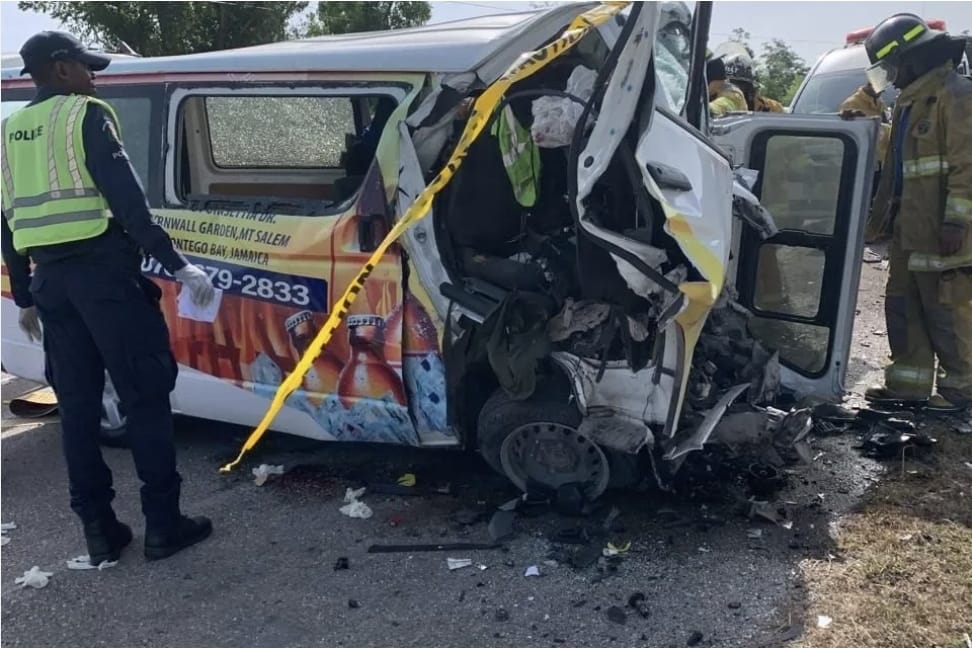
Four killed in early morning St. Mary single vehicle crash.
Two dead, driver in custody after crash on Sir Florizel Glasspole Highway
Four killed in two-vehicle collision along PJ Patterson Highway.
3-Year-old girl and 29-year-old Father die tragically in motor vehicle crash.
Five men killed instantly in a devastating two-vehicle collision on the Falmouth Bypass.
Two people pronounced dead following a crash involving a motor car and a truck on the Braco Main Road on Monday.
 Almost every day in Jamaica, the news tells yet another tale of tragedy—mangled vehicles, shattered families, blood-stained streets. From Morant Point in the East to Negril Point in the West, the rise in motor vehicle crashes—particularly those involving multiple fatalities—has become a public health and national development crisis. Drowning in concern, I sent an earlier version of this article to one of our newspapers in early 2025. It was not published. Then, we were being told that the fatalities to date were still below those for the previous year. I wasn’t convinced.
2024 was the first year since 2019 that Jamaica recorded less than 400 fatalities from road crashes with a total of 364 persons being killed. In 2025 the figure went up with 374 persons dying from fatal road crashes. To date on August 19, 2026 approximately 212 persons have died from fatal road crashes. By the time this article gets out, more persons will be dead. The crash on the Braco Main Road in Trelawny on Monday, August 17, 2026 claimed the lives of two very young persons, Alicia Dormer and Oneal Henry 25 and 26 years old respectively. Condolences to their families and their friends. Videos of that accident surfaced almost immediately, with the tragic and frightening scenes of end-of-life moments. I responded with words of comfort to a post from Oneal’s friend of 23 years, Benti, on Instagram this morning. His pain is immeasurable. His grief is unending at the loss of his friend from early childhood. In a few days, the public grief will subside and the families and friends will be left to mourn their deaths. There has to be a better way.
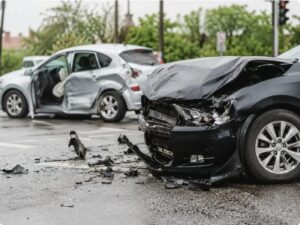
Police blotters show a significant increase in the numbers of reported road crashes, which do not result in fatalities. Insurance companies are reeling. The fatalities are the tip of an iceberg that sits on a symptomatic crisis that demands attention. We must search for solutions, beyond the threat of sanctions and appeals to good sense. Those have not been working. They do not work. They will not work. We must reduce the number of road crashes and we must reduce the number of fatal road crashes. We must reduce the numbers of young and not-so-young lives lost to these road crashes. Where do we turn? What do we do as a Jamaican nation?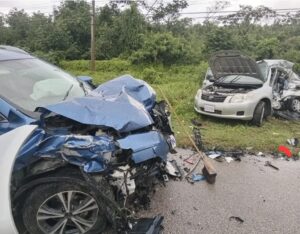
These deadly events are not isolated. They are symptomatic of a deeper malaise rooted in a mix of five dangerous I’s: Inexperience, Ignorance, Impatience, Irresponsibility and Invulnerability. These are not just abstract qualities; they manifest in a culture of recklessness, and the often preventable choices made by drivers daily on our roads.
- Inexperience
One of the major contributors to these crashes is the rising number of inexperienced drivers on our roadways. Navigating Jamaica’s diverse terrains and unpredictable traffic conditions requires seasoned judgment and skill. Novice drivers often struggle with hazard perception, vehicle control, and decision-making under pressure. Many see “pressing out” as a badge of esteem and drive at speeds far above the speed limit, which also limits their abilities to make quick corrections or take evasive action when necessary.
Alarmingly, a growing trend has emerged across Jamaica. From what was a small cottage industry of persons to now an almost accepted practice— with individuals purchasing motor vehicles first, then illegally acquiring a driver’s license without undergoing proper training or testing. In an earlier iteration, some persons would undergo a period of driver training from a licensed trainer, and then purchase the license because they feared failing the difficult “driving test”. Today a major percentage of persons now purchase the Learners and their full licenses, without ever having sat beside a licensed driving trainer, sweating it out in traffic. Some do so after acquiring a car. This practice of buying licenses is now an embedded practice, cutting across all age groups, genders, and educational backgrounds, and has become deeply rooted in the culture of driving. It fosters overconfidence without competence, and places untrained, unprepared drivers behind the wheels of powerful vehicles that they cannot control when something unexpected occurs because they lack the skill and composure to respond rationally and safely.
- Ignorance
Ignorance of road rules, safety practices, and the sheer power of a motor vehicle is another critical factor. Far too many Jamaican drivers operate with little to no understanding of how vehicles function. In addition, many are unaware—or worse, dismissive—of basic road codes. Indicators are ignored. Speed limits are treated as inconvenient suggestions. Traffic signals are not observed. Seatbelts remain unused. Motorcyclists ride without helmets, and passengers pile into vehicles well beyond capacity. Many drivers have never seen, much less read, the booklets that should accompany the driving test for a General or a Private Driver’s License. There is widespread underestimation of the dangers posed by speeding, tailgating, overtaking on blind corners, and other high risk behaviours. Many are clueless as to how to use a four-way intersection. They have no understanding of what to do or not do when driving past a school or a hospital.
This culture of ignorance extends to vehicle maintenance, distracted driving (especially from mobile phone use), and failure to yield or follow right-of-way rules. When ignorance meets inexperience, disaster is a guarantee.
- Impatience
Jamaican roads are filled with drivers in a hurry to get nowhere fast. This is displayed in aggressive overtaking, tailgating, risky lane-cutting, weaving in and out of traffic, dangerous overtaking on narrow roads, and the honking at and harassment of more cautious drivers. All these behaviours stem from a pervasive culture of impatience. Drivers treat red lights as optional and see speed as a badge of honour. This occurs whether on major highways, in built-up areas, at night or day, on weekdays or weekends. Even when the roads are empty on a Sunday, for example, drivers will overtake the two or three vehicles on the road at breakneck speed – as they race on their way to some unknown destiny. These impulsive driving behaviours create a volatile environment where one wrong move can, and sometimes does, lead to multiple deaths.
Impatience kills. It leaves no room for caution, for respect, or for life. We must foster a culture where patience behind the wheel is seen not as weakness, but as wisdom.
- Irresponsibility
Driving is a public responsibility. Yet many drivers approach the road with reckless abandon. Drunk driving, distracted driving, drag racing, and driving while sleep-deprived continue to plague our roads. Irresponsibility is often celebrated on social media with videos of speeding stunts, only for the headlines to mourn the same drivers days later. What is even more striking is that passengers in these vehicles also participate in encouraging drivers in this irresponsible behavior, putting their own lives at risk. All these actions reflect a dangerous driving culture where thrills, ego and social media clout outweigh safety.
- Invulnerability
Another troubling mindset, especially among many young male drivers, is a sense of invulnerability—especially when behind the wheel of late-model, high-end vehicles. Driving a luxury car seems to embolden a feeling of being untouchable, as if wealth or style could shield one from the laws of physics. These individuals often speed excessively, take dangerous risks, and perform stunts on public roads, all under the illusion that they are somehow immune to injury or death. The vehicle becomes not just a mode of transport but a status symbol, and with it comes a false confidence that fuels recklessness.
This false sense of security has proven fatal time and again. High-end cars come with very powerful engines and advanced features. Without respect for the road and proper training, these same luxurious, status symbols become lethal weapons. The feeling of invincibility, mixed with adrenaline and peer validation, results in poor judgment and tragic outcomes.
A Call to Action
If we are to curb this tragic rise in fatal road crashes, Jamaica as a nation must confront the dangerous convergence of inexperience, ignorance, impatience, irresponsibility and invulnerability within our driving culture. It is time for targeted and strategic action to significantly reduce the number of road crashes and fatalities. I suggest the following and, where these may already exist, that they be ramped up and enhanced:
- Enhanced Driver Education & Testing Integrity
Implement and monitor comprehensive training programs emphasizing defensive driving techniques and situational awareness. Crucially, there must be a crackdown on the illegal sale and purchase of both Learners and Driver’s licenses. Licensing authorities must be empowered to audit, investigate, and shut down these corrupt practices. A system of tracking the driver-training hours undertaken by Learners should be implemented with Licensed Trainers logging and signing off on the hours-in-training for an individual as a part of their final qualification for a Drivers License.
2. Return to Driving School as Penalty for Driving Infractions
Send reckless and careless drivers, persons who speed, break stop signs, drive under the influence and others who engage in various problematic behaviours is a valuable method of enforcing behavior change. Drivers who fall within these categories have their Driver’s Licenses suspended and are sent back to approved Driving Schools for staggered blocks of time depending on the category and seriousness of their infringement. They pay for their lessons and complete the required hours, which are then verified, before they are allowed back into the national driving pool. This dual method will enhance driving skills and upgrade driving culture, while also providing additional income for a range of Driving Schools.
3. National Behaviour Change Campaign
Launch targeted campaigns using legacy and social media, influencers, schools, and churches to change the culture of road use from aggression and irresponsibility, to rational and responsible.
4. Community Engagement:
Encourage community policing and citizen reporting of reckless road behaviours. Road safety is everyone’s business.
5. Use of Technology & Stricter Enforcement:
Increase the use of speed cameras, red light cameras, and breathalyzers. Link violations to licensing records to enable swift penalties. Ensure that penalties are enforced.
6. Celebrate Safe Drivers: Recognize and reward long-term safe drivers in special national activities. Build pride around responsible and safe driving.
Cumulatively we have lost and continue to lose a significant portion of our productive citizenry whose potential to contribute to our society and their families is lost. It is time for a cultural shift in how we approach road use and the way we value life over ego. These preventable deaths are not just numbers—they are fathers, mothers, sons, daughters, friends, employees and more. Let us act with urgency to prevent further loss of life, rise above these five I’s, and commit to driving with intelligence, intention, and care. Our lives—and our nation’s future—depend on it.
Donna P. Hope, PhD is Professor of Culture, Gender and Society at the University of the West Indies, and a Social and Cultural Activist/Commentator. Email her at dqueen13@hotmail.com or donna.hope@uwi.edu
